Delhi-NCR’s Pod Taxi Revolution: How Noida International Airport Could Redefine Urban Mobility Near Jewar
By Singh Balraj
Published: May 22, 2026
Delhi-NCR may soon witness one of India’s most futuristic public transport projects as plans for a large-scale pod taxi network near Noida International Airport continue to move forward. The proposed system is expected to connect Jewar Airport, Film City, industrial sectors, and major business hubs through a driverless rapid transit corridor designed to reduce congestion and improve last-mile connectivity across the Yamuna Expressway region. (News24)
The project is not just another transport proposal. Urban planners, infrastructure experts, and real estate investors are closely watching it because the pod taxi corridor could fundamentally reshape how people travel around Greater Noida and the emerging airport ecosystem.
What Is the Proposed Pod Taxi Project?
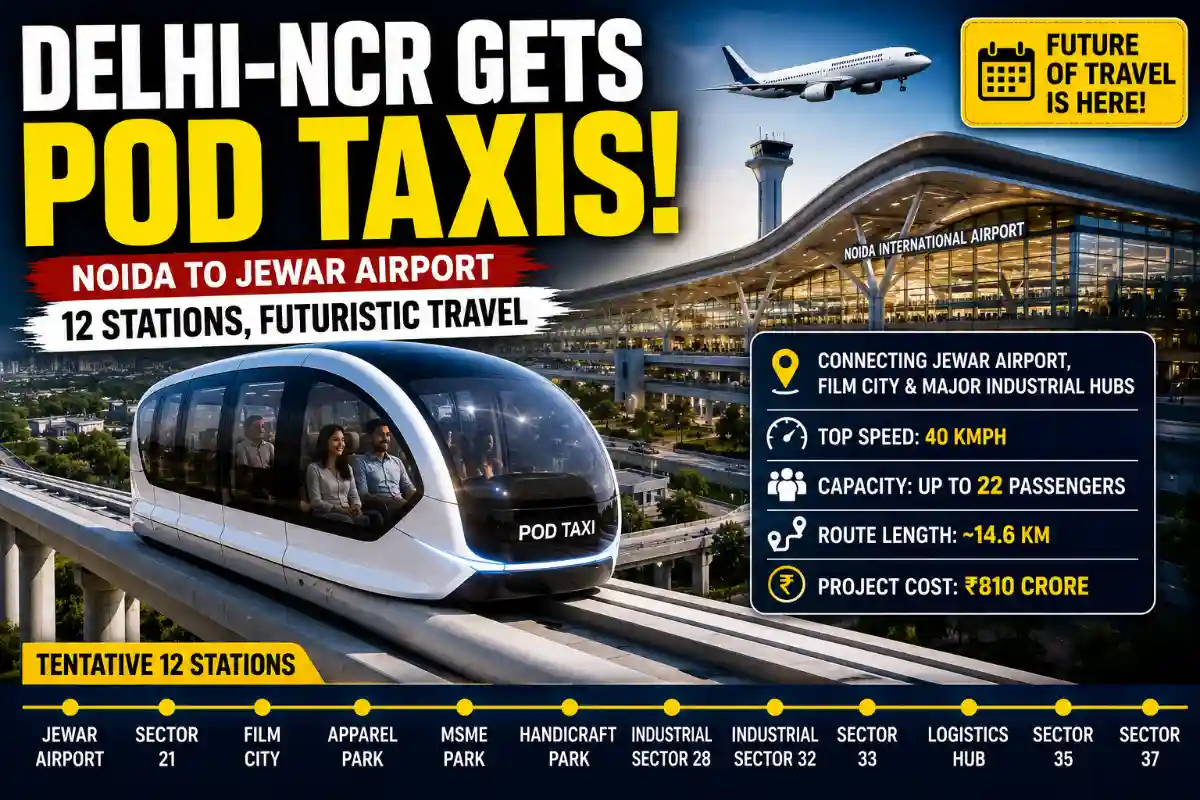
The proposed Personal Rapid Transit (PRT) system — commonly known as a pod taxi network — is planned as an elevated, driverless transport corridor connecting Noida International Airport at Jewar with Film City and nearby industrial sectors. (News24)
According to current plans, the route may stretch approximately 14.6 kilometers and include around 12 stations across strategically important sectors near the airport zone. (News24)
The network is expected to pass through:
- Sector 21 Film City
- Apparel Park
- MSME Park
- Handicraft Park
- Industrial and logistics zones near YEIDA sectors
The broader goal is to create a seamless mobility corridor between:
- Noida International Airport
- Film City
- industrial parks
- business districts
- future residential hubs
Why the Pod Taxi System Matters for Delhi-NCR
Delhi-NCR already suffers from some of India’s worst traffic congestion and urban mobility challenges. While metro rail and expressways continue expanding, last-mile connectivity remains a major issue — especially in rapidly developing regions like Yamuna Expressway and Jewar.
The pod taxi system aims to solve this gap.
Unlike traditional metro systems, pod taxis are:
- fully automated
- electrically powered
- smaller in size
- designed for short-to-medium urban routes
- capable of operating at higher frequency with reduced waiting time
Officials believe the system could dramatically improve mobility near the airport while reducing dependency on private vehicles. (News24)
Planned Capacity and Speed
Current proposals suggest:
- top speeds of around 40 kmph
- capacity of up to 22 passengers per pod in larger configurations
- nearly 30,000 expected daily commuters in early stages (News24)
The project may eventually scale to nearly 945 pods in phases, beginning with approximately 146 pods during the initial rollout. (News24)
This phased expansion model is intended to match passenger demand as the airport region develops over the next decade.
Estimated Project Cost
The proposed project cost is estimated at approximately ₹810 crore according to current DPR-related discussions and planning reports. (News24)
Earlier proposals included:
- longer routes
- more stations
- higher project estimates
However, the latest planning revisions appear focused on optimizing costs while ensuring connectivity to key growth corridors near Jewar Airport.
Noida International Airport Is Driving the Entire Ecosystem
The pod taxi proposal is directly linked to the larger vision surrounding Noida International Airport, which is emerging as one of India’s biggest infrastructure projects.
The airport is expected to become:
- a major aviation hub
- logistics center
- industrial growth engine
- real estate hotspot
- commercial corridor for North India
The Yamuna Expressway Industrial Development Authority (YEIDA) has already planned:
- logistics parks
- Film City
- industrial zones
- warehousing clusters
- commercial townships
around the airport ecosystem. (Business Standard)
Efficient mobility infrastructure is now becoming critical to support this expansion.
Could Pod Taxis Become the Future of Urban Mobility in India?
Globally, pod taxi systems have been explored in cities looking for sustainable and automated transport alternatives.
Countries including:
- the United Kingdom
- South Korea
- Japan
- the UAE
have experimented with Personal Rapid Transit systems in airports, business parks, and urban mobility zones. (Orange Door Infra)
India’s growing smart city ambitions are now pushing similar conversations around:
- automation
- green mobility
- electric transport
- AI-driven urban infrastructure
If successfully implemented, the Noida-Jewar pod taxi project could become one of the country’s most visible experiments in future-ready transport systems.
Real Estate Impact Around Jewar Airport
Infrastructure projects of this scale rarely affect transportation alone. They often reshape entire regional economies.
Experts believe improved airport connectivity and smart mobility systems could significantly influence:
- property demand
- commercial investments
- warehousing growth
- hospitality expansion
- industrial development
Areas around:
- YEIDA sectors
- Film City
- logistics hubs
- airport corridors
are already witnessing increasing investor attention due to ongoing infrastructure activity. (Orange Door Infra)
For many investors, the pod taxi proposal signals that authorities are preparing the region for long-term urban expansion rather than just airport operations.
Challenges the Project Could Face
Despite the excitement, several challenges remain.
Large-scale infrastructure projects in India often face delays due to:
- land approvals
- funding structures
- environmental clearances
- technical integration
- public-private partnership complexities
Pod taxi systems are also relatively new for Indian cities, meaning authorities will need to carefully evaluate:
- operational safety
- scalability
- maintenance costs
- passenger adoption
- regulatory standards
Experts also caution that long-term execution quality will determine whether the project becomes a genuine mobility breakthrough or remains another delayed urban proposal.
The Bigger Picture: Delhi-NCR’s Infrastructure Transformation
The pod taxi proposal reflects a much larger transformation currently underway across Delhi-NCR.
Alongside:
- the Delhi-Mumbai Expressway
- rapid rail systems
- airport expansion
- expressway corridors
- smart city projects
the region is gradually evolving into a highly interconnected economic zone. (The Times of India)
The success of these projects could redefine:
- commute times
- urban planning
- investment patterns
- business expansion
- quality of life
for millions of people living across NCR over the next decade.
Final Thoughts
The proposed pod taxi network connecting Noida International Airport with Film City and industrial sectors represents more than a futuristic transport idea. It reflects how India’s urban infrastructure ambitions are shifting toward automation, sustainability, and integrated mobility.
If implemented effectively, the project could become one of the most important transport innovations in the Delhi-NCR region — improving airport connectivity while accelerating economic growth near Jewar.
For now, the proposal remains under development, but one thing is becoming increasingly clear: the future of urban transport in India may look very different from the roads and metro systems people rely on today.